
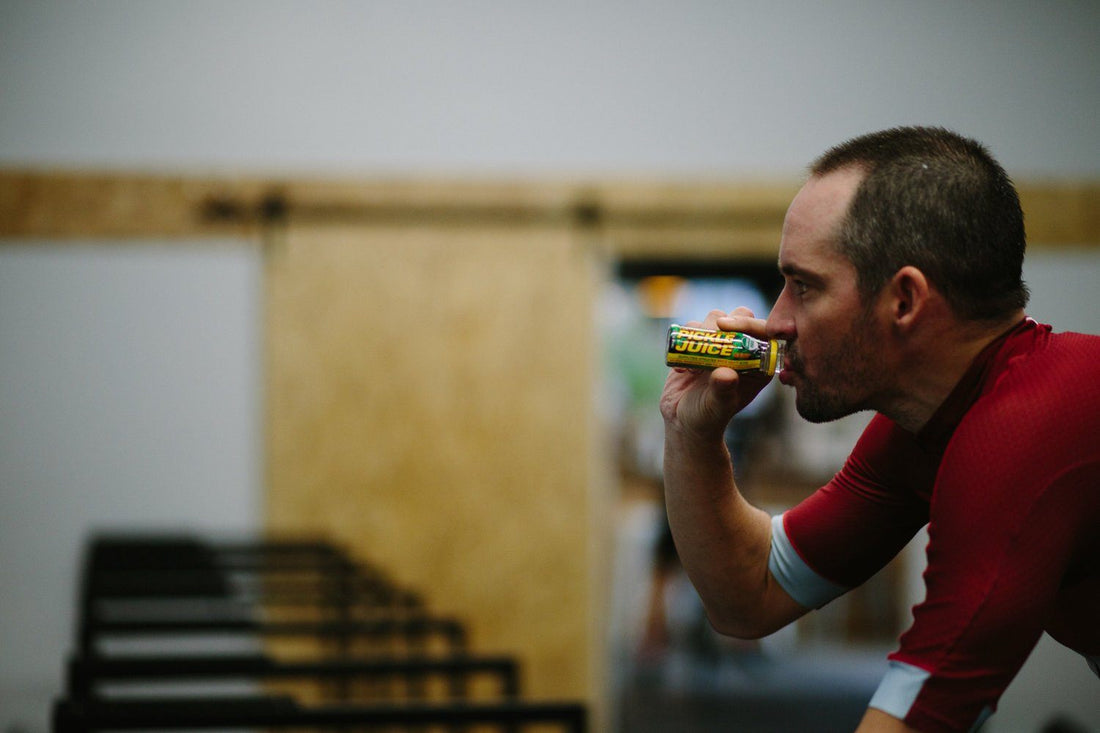
Pickle juice: the new panacea?
Muscle cramps: after bananas, pickles
Parmi many physical discomforts that athletes can endure, muscle cramps cause as many grimaces as they do pain. Often striking at the worst possible moment during a race, when you're pushing forward, gritting your teeth and ready to give it your all, they sap your enthusiasm and elicit some strong language. Even if they seem far-fetched, all the solutions we've heard or read about are considered: eating a banana, massaging while singing, drinking water with your head Socks, hopping on one foot...
Many theories attempt to determine the cause of muscle cramps. It seems that the truth lies in a combination of factors, the importance of which varies from athlete to athlete. Genetics is the most important factor, followed by neurological aspects, dehydration, and electrolyte intake.
Obviously, someone who is prone to cramps just from walking down the street will undoubtedly be more at risk of experiencing them after cycling 100 km in the blazing sun bidons . Although there are many solutions available to relieve these cramps, which strike even harder than our worst competitor, unfortunately there is no miracle cure for a quick recovery. How can you ease the pain? The best solution is simply to remain still until the cramp passes, gently massage the contracted area toward the heart, and drink water.
Prevention mission
As the old saying goes, prevention is better than cure. But to prevent effectively, we need to address the causes over which we have some control. So let's skip genetics, which unfortunately cannot be changed. For the rest, theory tells us that we must stay well hydrated at all times, in addition to consuming a good amount of electrolytes (sodium, potassium, magnesium). These minerals are eliminated through sweat, and the imbalance this creates can interfere with proper water absorption and disrupt cellular exchanges, leading to muscle fatigue... and those infamous cramps.
For workouts lasting less than 60 minutes, water alone will keep us properly hydrated. It is recommended to drink enough in the hour before training, as well as every 20 minutes during exercise. A balanced and varied diet throughout the day will also help us to replenish our reserves of essential vitamins and minerals.
For workouts lasting longer than 60 minutes, it is recommended to add electrolytes to your water to maximize hydration and replace minerals lost through sweat. Water remains the liquid of choice, especially for the first 45 minutes, but after that, it is recommended to consume an electrolyte drink at a rate of at least 400-500 mL per hour, or according to your tolerance and sweat volume. Be sure to check the nutrition facts table: for a 500 ml drink, you should have 300 to 400 mg of sodium.
Pickle juice: the new miracle cure?
Because sometimes a few minutes can make all the difference in performance, athletes are always the first to try new ways to be more efficient when exercising. So you won't be surprised to see the unprecedented craze for pickle juice. No, it's no longer just for pregnant women: seasoned cyclists are getting in on the act too! According to its most loyal supporters, drinking this liquid before exercise can delay the onset of cramps or even prevent them altogether. For someone who constantly struggles with this muscular affliction, this seems like a very appealing option... but as for the taste, we'll pass.
Although few scientific studies have examined the consumption of pickle juice among athletes, it appears that drinking it before training may reduce muscle cramps by acting as a prophylactic agent. However, there is no data to suggest that this practice improves aerobic performance or thermoregulation. For most athletes, consuming up to 200 ml of pickle juice 30 to 60 minutes before a competition may reduce the duration of cramps when they occur.
In addition, be aware that consuming too much sodium before exercise, combined with insufficient fluid intake, could intensify symptoms of dehydration and cause intestinal discomfort.
A crossover intervention study[1] examined the effects of consuming pickle juice, a salt solution, or plain water before running on a treadmill for more than 30 minutes at a vigorous intensity. The authors believed that pickle juice could delay the onset of muscle cramps and/or reduce their duration, compared to the other two drinks. The main results show that ingesting 2 ml/kg of body weight of pickle juice (75 kg = 150 ml) or a hypertonic saline solution does not improve performance, thermoregulation, or even plasma volume compared to simply drinking water.
Furthermore, when comparing their results with other studies, researchers believe that consuming between 3 and 7 ml/kg of pickle juice could potentially improve the performance and plasma volume of well-trained athletes. But above all, they highlight the importance of drinking enough water to ensure optimal hydration during exercise, thereby delaying the onset of muscle fatigue and reducing certain intestinal discomforts.
In addition, consuming up to 900 mg of sodium before exercise in the form of a concentrated drink could also improve rehydration and athletic performance. Thus, it is not so much the pickle juice itself as the sodium consumed before exercise that has a positive effect on performance. By preserving the athlete's plasma volume, this could improve their thermoregulation while delaying muscle fatigue and the onset of cramps. It should be noted that the quantities to be tried are very concentrated and will therefore not be tolerated in the same way by all athletes. For athletes, hypernatremia (too much sodium) is just as debilitating from a physiological point of view as hyponatremia (not enough sodium).
Several ways to help each other
Because food alone is never the only solution, it is important to remember that before obsessively jumping on the bandwagon, there are a few things we can do ourselves, such as drinking enough water before and during exercise and eating properly every day to meet our vitamin and mineral needs and recover properly.
For those who often cycle for more than 60 minutes in high temperatures, sufficient electrolyte intake before and during exercise is also a key factor.
For personalized and tailored recommendations, don't hesitate to consult a sports nutritionist!
Foods naturally rich in magnesium and potassium

Plasma volume is the liquid that makes up blood and allows it to circulate properly throughout our bodies. It plays an essential role in maintaining electrolyte exchanges between the blood and cells.
Reference
1. Peikert, J. et al., "Pre-exercise ingestion of pickle juice, hypertonic saline, or water and aerobic performance and thermoregulation," in Journal of Athletic Training, vol. 49, no. 2, 2014, pp. 204-209.