
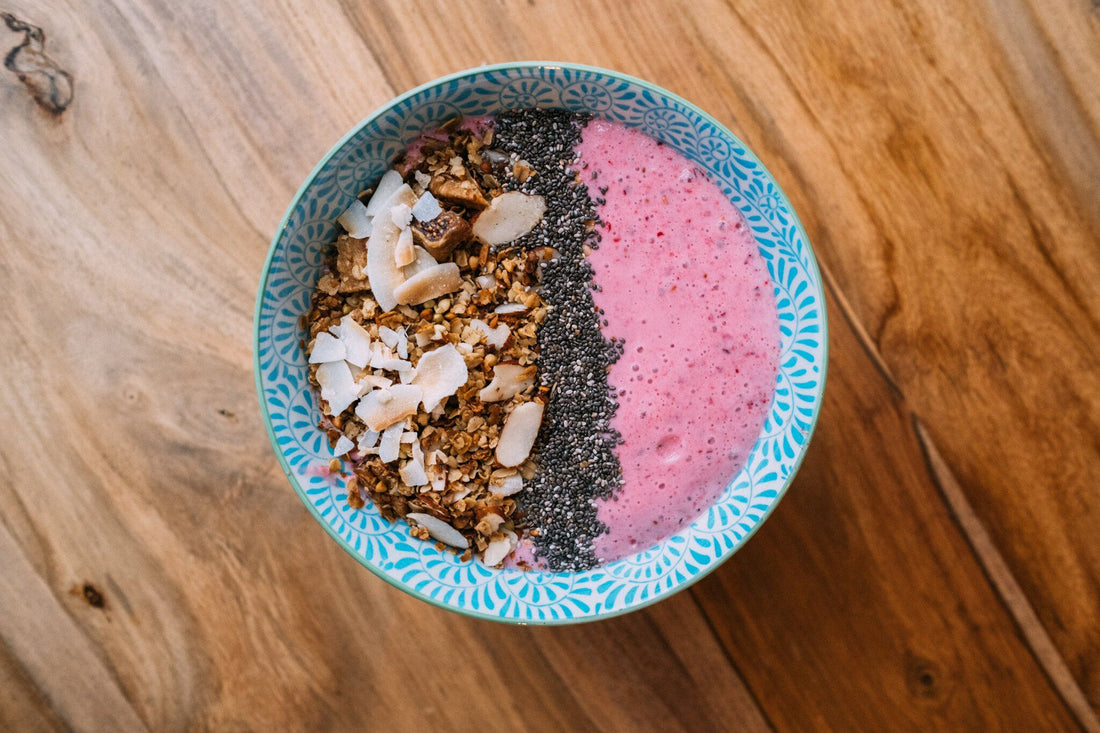
Every morning you'll have breakfast
Let's get one thing straight: it's wrong to think that lunch is the best meal of the day. The nuance lies rather in the fact that it is essential to eat a balanced and sufficient diet, at least three times a day, including in the morning. However, according to a study conducted in 2004, this meal was the lightest and most often skipped by Quebecers (Blanchet, Trudel & Plante, 2009).
As the word suggests, breakfast means breaking the fast. Indeed, if you don't get up at night to snack, you are practicing a form of intermittent fasting by abstaining from eating for a fairly long period of time, approximately 10-12 hours. This first meal not only breaks your fast, but also helps activate your basal metabolic rate. It will also allow you to consume several essential vitamins and minerals, while activating your alertness and concentration.
The importance of eating breakfast is clear, but we must pay attention to the quality of the foods we put on our plates. In our typical North American habits, it is sometimes easy and reassuring to turn to foods that are high in added sugars and fats but low in fiber and protein. Too often, this type of dessert-like breakfast will only add unnecessary calories to our day, increase our craving for sugary foods, and leave us feeling unsatisfied and mentally foggy. Breakfast, like other meals, should consist mainly of unprocessed foods, be rich in whole grains, and provide a good source of complete protein (Table 1).
Table 1: Substitutions for a balanced lunch
Skip breakfast to lose weight?
Parmi many myths surrounding nutrition is the belief that skipping breakfast can help you lose weight. However, scientific research on the subject shows that eating breakfast actually promotes a healthier relationship with food, good eating habits, and a healthy weight in the long term. Why? Because starting the day with nutritionally rich foods reduces our desire to snack and makes us less hungry at subsequent meals. Furthermore, epidemiological studies on the subject show that people who regularly skip breakfast tend to have less healthy lifestyles. They are more likely to have deficiencies in iron, B vitamins, folic acid, and dietary fiber. What's more, a recent meta-analysis of nearly 100,000 studies found that people who skip breakfast are more likely to develop type 2 diabetes in the long term than those who eat breakfast every day (Ballon, Neuenschwander & Schlesinger, 2018).
This meal gives us one more chance to meet our needs, whether for dietary fiber or essential vitamins and minerals. When we skip it, we have fewer opportunities during the day to satisfy these many needs, and we are more likely to find ourselves with an empty stomach—and succumb!—to the ultra-processed foods that abound in our obesogenic food environment (Brown, Bohan Brown & Allison, 2013).
The case of athletes
Many athletes still believe that training on an empty stomach will improve their use of energy substrates, make them more efficient, and possibly lighter for the same amount of power exerted.
However, skipping a meal before training is more likely to drain our energy, prevent us from giving 110%, and, above all, probably affect our mood during exercise, thereby dampening our enjoyment and intrinsic motivation.
For athletes who want to better manage their body weight, a consistent protein intake is essential to increase satiety, reduce cravings, and preserve muscle mass. Breakfast is also a good way to ensure sufficient intake of complex carbohydrates to replenish energy. Skipping this meal is associated with a decrease in total carbohydrates throughout the day, which can negatively affect training and put athletes at risk of injury (Manore, 2015).
However, it is not always easy to manage meals during early morning training sessions. For many people, balancing work and sport requires juggling schedules to fit in training sessions well before sunrise. In this context, it's difficult to eat two hours before exercise to promote good digestion. A light, carbohydrate-rich breakfast is therefore recommended to ensure you have enough energy. But be careful: a snack after this workout is essential not only to refuel and repair muscle fibers, but also to adequately supplement your breakfast. For example, you could have a small bowl of oatmeal with maple syrup before your workout, followed by a smoothie with plant-based protein, fruit, and nut butter on toast.
Spread out and vary
Do you often feel a little nauseous in the morning? Don't rush to eat a heavy meal. Instead, choose liquid options, such as smoothies, or spread your breakfast out over a longer period of time. Start with foods that you digest better and continue your meal once you're at work or on the road.
For recreational athletes and high-performance athletes alike, the importance of eating a good breakfast is indisputable. However, it's important to be wary of ultra-processed foods, pastries disguised as breakfast items, and sugary drinks. Otherwise, get creative by trying new recipes or varying the types of protein, spices, and textures you use! Breakfast, which is too often routine, could thus regain its prestige. It deserves it!
REFERENCES
Ballon, A., Neuenschwander, M., & Schlesinger, S. (2018). "Breakfast Skipping Is Associated with Increased Risk of Type 2 Diabetes among Adults: A Systematic Review and Meta-Analysis of Prospective Cohort Studies," The Journal of Nutrition, vol. 149, no. 1, pp. 106-113.
Blanchet, C., Trudel, J., & Plante, C. (2009). Overview of the diet of Quebec adults, Institut national de santé publique du Québec.
Brown, A. W., Bohan Brown, M. M., & Allison, D. B. (2013). "Belief beyond the evidence: using the proposed effect of breakfast on obesity to show 2 practices that distort scientific evidence," The American Journal of Clinical Nutrition, vol. 98, no. 5, pp. 1298-1308.
Manore, M. M. (2015). "Weight management for athletes and active individuals: a brief review," Sports Medicine, vol. 45, no . 1, pp. 83-92.