
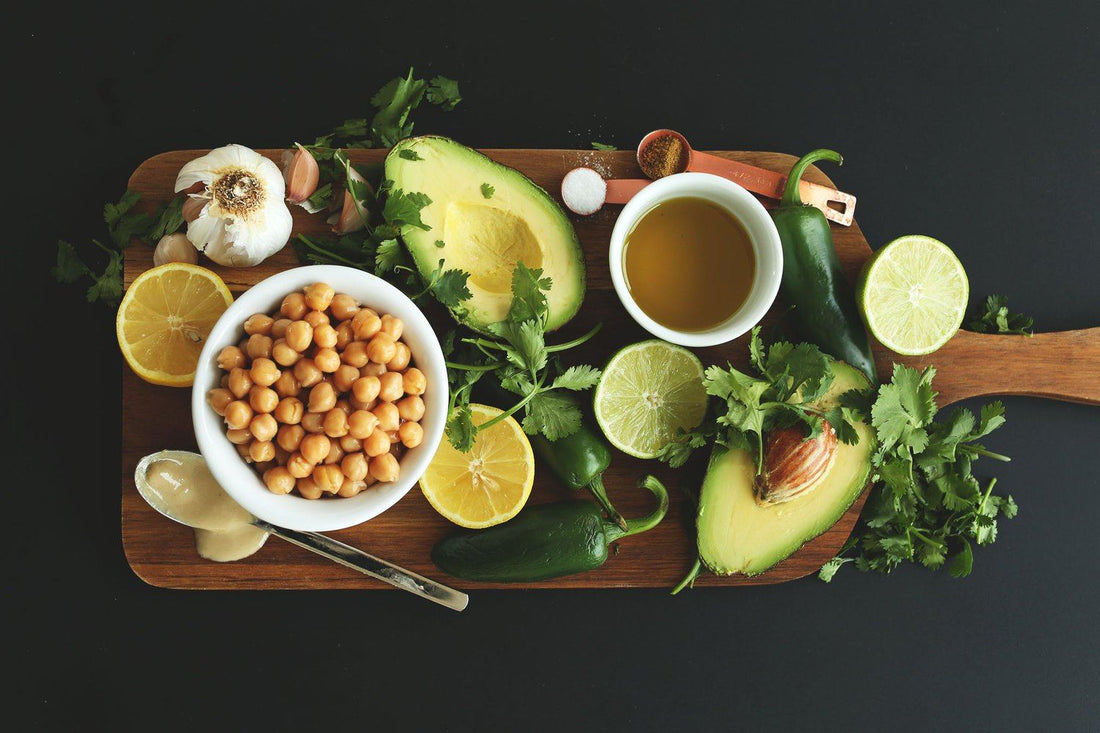
Vegan rolling
A recent report published by the EAT-LANCET Commission, composed of around 40 scientists, reveals that in order to successfully feed the entire planet in a sustainable manner by 2050, we will have to radically reduce our meat consumption. The solution? Incorporate flexitarianism into our eating habits, i.e., adopt a diet rich in plant-based proteins (legumes, tofu, nuts, seeds) that also includes eggs and fish and limits animal proteins as much as possible.
The conclusions of this report are clear: "The global adoption of healthy diets derived from sustainable food systems would protect our planet and improve the health of billions of people."
Popular with athletes, meat is often associated with strength and vigor in the collective consciousness. Rich in protein, it conjures up images of power and chiseled muscles. Should athletes who are considering switching to a flexitarian or even vegetarian diet fear a drop in performance?
The different types of vegetarianism
Before we delve into what science tells us, let's learn to distinguish between the different types of diets that promote plant-based proteins.
The most flexible approach is aptly named: flexitarianism. Let's say it's a way of gradually adopting vegetarianism, without restricting yourself at all costs. Everything is allowed, but you limit your consumption of animal products.
Next comes vegetarianism, which comes in several varieties.Lacto-ovo vegetarianism eliminates meat, fish, and seafood from the diet, but allows eggs and dairy products. Lacto-vegetarianism excludes eggs in addition to animal products. Conversely,ovo-vegetarianism excludes dairy products but allows eggs. Finally, pesco-vegetarianism eliminates red meat and poultry but allows fish and seafood.
At the other end of the spectrum,veganism (also incorrectly referred to as veganism) excludes all animal products, including eggs, honey, and dairy products.
Although vegetarianism is often associated with better health because it promotes a diet richer in fruits and vegetables (vitamins, minerals, antioxidants) and whole grains (fiber), caution is needed, as some diets inspired by it, such as raw foodism, are more restrictive and can lead to deficiencies in essential vitamins and minerals if followed without supervision.
So, how did it go?
But let's get back to the matter at hand... or rather, to our plants! For endurance athletes, training is important, yes, but so is developing a sharp mind to better cope with the intensity and fatigue of long-term exertion, the compromises, the rigor, and the stress that it inflicts on their bodies day after day. To achieve this, athletes must be in good health, have a healthy lifestyle, and therefore a good diet (Wirnitzer, K., et al., 2019).
A crossover intervention study (Lynch, H.M., C.M. Wharton, and C.S. Johnston, 2016) compared VO2max (treadmill) and maximum power (bicycle) in 27 vegetarian athletes and 43 omnivorous athletes. The results suggest that vegetarians had higher cardiorespiratory endurance than omnivores, but that maximum power was not different between the two groups. These results tend to show that following a vegetarian diet does not lead to a decrease in performance and that this type of diet may have positive effects on aerobic capacity.
We know that protein intake after exercise is necessary for proper recovery. Can plant proteins meet these needs in the same way as animal proteins? The answer is yes. A good combination of several plant sources offers roughly the same recovery benefits as animal proteins. Proteins from legumes, seeds, and even insects are good examples. If you are an ovo-vegetarian or lacto-vegetarian, you can also benefit from whey powder, which contains casein, an amino acid known for its recovery benefits after long-term exercise (Hoffman, J.R. and M.J. Falvo, 2004).
It is therefore entirely appropriate to switch to a flexitarian or vegetarian diet, even if you are physically active on a daily basis. As with any change in habits, start by asking yourself why you want to adopt this type of diet and what it can do for you in the long term. Remember that a healthy diet is also one that reflects our values and brings us pleasure with every bite!
But don't worry, eating tofu won't affect your performance... In fact, it will allow you to ride for a long time on a healthy planet.
Amount of protein in a vegetarian/flexitarian diet

1. Wirnitzer, K., et al., "Health Status of Female and Male Vegetarian and Vegan Endurance Runners Compared to Omnivores—Results from the NURMI Study (Step 2)," Nutrients, 2019.
2. Lynch, H.M., C.M. Wharton, and C.S. Johnston, "Cardiorespiratory fitness and peak torque differences between vegetarian and omnivore endurance athletes: A cross-sectional study," Nutrients, 2016.
3. Hoffman, J.R. and M.J. Falvo, "Protein–which is best?", Journal of Sports Science & Medicine, 2004.