
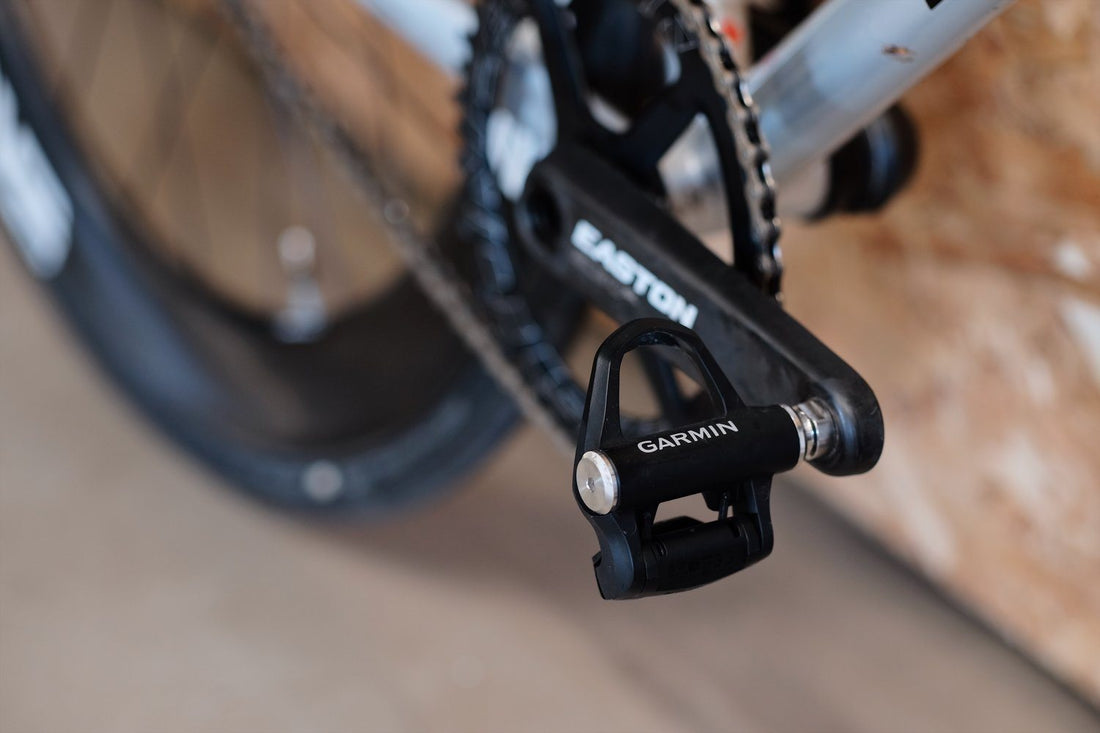
Why train with Power Meter?
Once reserved for professionals or serious athletes due to their stratospheric cost, Power Meters widely available and accessible to everyone.
But even before this democratization of sensors, many Tacx, CompuTrainer, Elite, and other training bases allowed users to train using what has become the absolute measure of cycling performance: watts.
Your legs lie to you, but your watts don't!
There are three methods for measuring the level of effort expended during a cycling workout: how you feel, your heart rate, and your wattage.
The problem with howyou feelis that it can often be misleading. On a good day, you can easily get through a difficult workout without too much trouble, while on another day, even if you're in the same shape but more tired or stressed, you'll struggle to complete the same effort.
Heart rate analysis, on the other hand, is not useless, but it simply doesn't measure the same thing as a Power Meter. Heart rates indicate the effort being exerted by the body, while watts measure the energy expended during a workout. Depending on your fatigue, training load, or other factors (such as stress, dehydration, heat), your heart rates may vary from day to day to provide the same amount of energy.
Watts never lie.
400 watts is 400 watts. Whether it tears your legs apart or not. Whether your heart rate peaks at 140 BPM or soars to 170 BPM.
To draw an analogy: your watts indicate the power of your engine, and your heart rate indicates the fuel consumption required to achieve that power.
For training with reliable and, above all, stable measurements, watts are unbeatable. Power is the friend of amateur cyclists.It's better to train efficiently and a little than haphazardly and a lot.
The advantage of training with the Power Meter
Among other things, it allows you to do intense, short intervals that are almost impossible to measure effectively with a heart rate monitor (by the time you've done 30 seconds at high power, your heart rate will probably not have reached a stable figure that can be relied upon), repeating the right effort for the right amount of time, as many times as necessary.
While the gains from this type of training are noticeable among professionals, they are often even greater among amateurs, even if the latter are content with three intense one-hour workouts per week.
Why?
Intense effort forces the body to adapt to repeated high-intensity exertion. This is how you get in shape.
Measure your efforts, your fatigue, and set your goals.
Whether you want to go on a few mountain bike rides, participate in a gran fondo, or simply keep up with the lead group when rides friends, training with a Power Meter access to a wealth of data that allows you to manage your training plan, track your progress, and peak at the right time.
It also allows you to measure fatigue and avoid overtraining, and finally to quantify the intensity factor(IF) and overall effort (TSS, or training stress score) of each session to keep track of your total training load.
And this is just the beginning.
With tracking software and the help of a good coach to better understand the intricacies, training with a Power Meter new doors for amateur cyclists: those of effective and measurable fitness.