
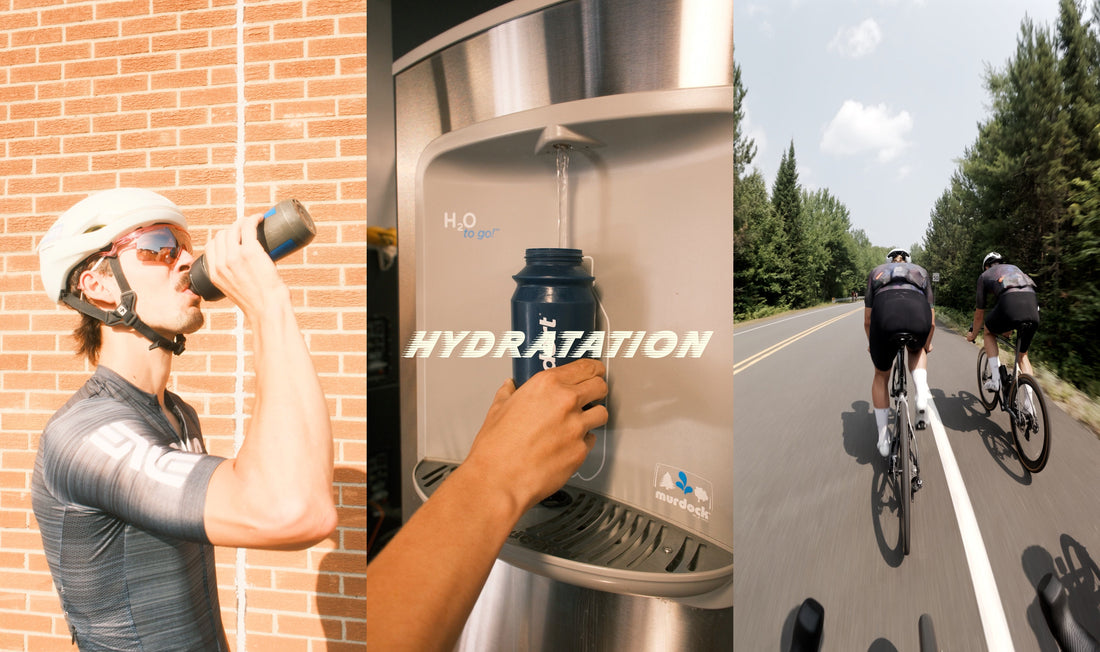
Hydration Guide for Cyclists
Do you drink enough when you ride? What are the consequences of not staying hydrated during exercise?
We take a comprehensive look at the issue, backed up by scientific studies.
Quantity
Many cyclists use the good old rule of thumb that you should drink at least one bidon 500ml) per hour while cycling.
This not very scientific recommendation is actually not far off from scientific recommendations, which suggest drinking between 400 and 800 ml per hour. However, several factors must also be taken into account when measuring the amount of fluid to drink:
Thirst. This is the best indicator that it's time to drink. So listen to your body.
Is it very hot? If so, you'll feel the effects of dehydration more quickly due to increased sweating. Dehydration can have a negative effect on thermoregulation, thereby worsening the situation.
Is the effort intense? If so, again, sweating is more significant and body temperature will rise quickly. All the more reason to pay attention to your water intake.
What about sodium?
Sodium plays an important regulatory role in the body.
It is an electrolyte that is essential for the body to function, and even more so during exercise, because it is responsible for the sensation of thirst, the quality of water absorption by the body, maintaining blood volume, and muscle contraction.
When you sweat a lot, you lose this essential mineral in large quantities and need to replace it, especially during rides longer than 2 hours.
How can you tell if you sweat a lot? If you're the type of person who leaves salt stains on your swimsuits, it's a sign that you sweat a lot and lose a significant amount of minerals when you exercise.
In this case, you should consume 300 to 600 mg of sodium per hour while cycling.
How can you tell if you are dehydrated
A good way to tell if you are dehydrated is to weigh yourself before and after exercise.
If you've lost a pound or two, it's a sign that you need to replenish your fluids to restore the same volume of water you had before exercising.
Another good technique is to use the color of your urine to determine whether your body is thirsty.
This is what professional athletes do when they are given the following charter (which is also often displayed in the restrooms of sports centers).

Studies cited:
Holland, J. J., Skinner, T. L., Irwin, C. G., Leveritt, M. D., & Goulet, E. D. B. (2017). The Influence of Drinking Fluid on Endurance Cycling Performance: A Meta-Analysis. Sports medicine (Auckland, N.Z.), 47(11), 2269–2284. https://doi.org/10.1007/s40279-017-0739-6Vitale, K., & Getzin, A. (2019). Nutrition and Supplement Update for the Endurance Athlete: Review and Recommendations. Nutrients, 11(6), 1289. https://doi.org/10.3390/nu11061289