
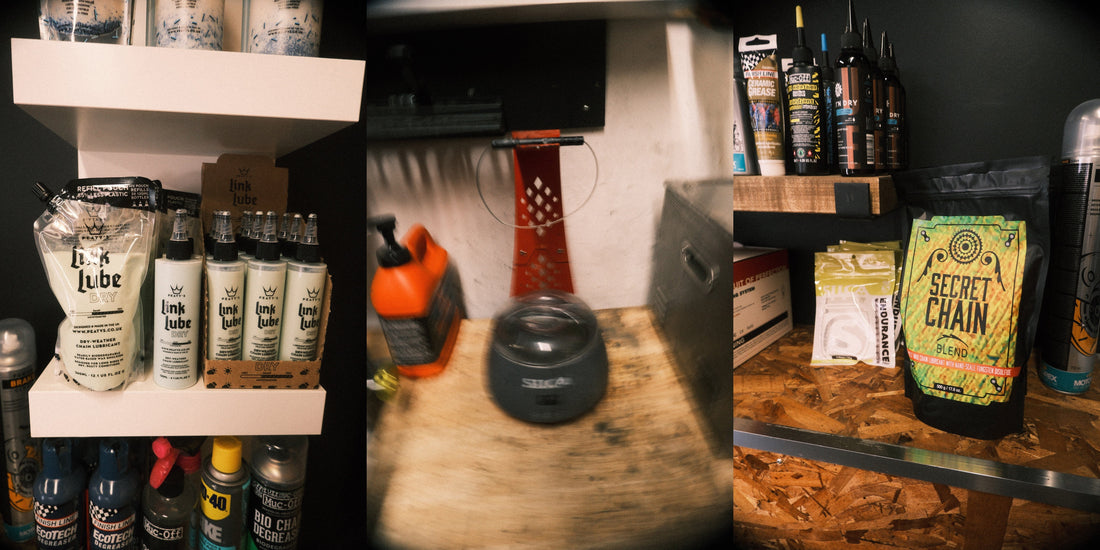
Waxing your chain is not rocket science
In just a few years, wax has become the coating of choice for cyclists seeking alternatives to traditional lubricants, both among professionals and amateurs.
We explore this new practice, outline its advantages, and debunk a few myths about the supposed complexity of this "new wave" lubricant.
Spoiler: it takes a little work, but considering the benefits, it's really not that complicated.
Why wax rather than oil?
Here is a quick list of the advantages of using wax rather than oil:
- It's easier to clean, and the chain no longer retains all the road debris.
- Unless you're riding in filthy conditions, you hardly ever need to wash your chain anymore.
- The durability of the chain is increased tenfold due to this cleanliness, thus reducing wear and tear.
- Less deterioration = less friction = a few free watts.
Anatomy of a bicycle chain (waxed or unwaxed)
To explain the advantages of this practice in more detail, we need to examine the anatomy of a bicycle chain.
On the sides, plates are held together by rivets. Cylinders are threaded onto these rivets. These cylinders come into contact with the teeth of the drive system (sprockets, pinions, rollers) and rotate on the rivet to ensure smooth and efficient movement.
Unfortunately, oil (and especially dry oils) tends to allow road dirt to clump together on the chain and enter the gaps between the rivet and the cylinder. This reduces the efficiency of the rollers on the rivets and, due to the presence of dirt, accelerates wear.
Conversely, wax (hot or liquid in a bottle) penetrates the cylinders, retains much less road residue (or dust on gravel, or even on trails), while the film that dries on the surface improves the fluidity of movement in the gear.
The result is a cleaner, more durable, and more efficient system, since reducing friction saves a few precious watts.
ATTENTION NEW CHAIN!
The worst lubricants are those found on new chains. Their main function is to preserve the chain, preventing corrosion when it is stored, sometimes in less than ideal conditions, for years at a time.
This extremely sticky lubricant collects dirt like a magnet for sand and dust, damaging all parts of the gear system, starting with the chain itself.
It is therefore ESSENTIAL to clean this chain, either with specialized products, solvents, or additives that can be added to hot wax to dissolve and remove the original lubricant.
Otherwise, the wax will not penetrate the gaps and dirt will continue to accumulate.
(NOTE: You can purchase new chains that have already been cleaned and coated with a first layer of wax, to save you this step.)
The myth ofCare
Hot wax lasts for approximately 500 km. However, if you wipe your chain with a microfiber cloth after each use, you can maintain this base wax with liquid wax.
You can even use only the latter instead of opting for hot wax.
However, it is important to apply it several hours before use to give it time to dry. (Ideally, the day before)
Waxing at home
Not everyone is equipped to do hot waxing at home.
However, the process is fairly simple, and there are particularly effective home systems available for purchase.
Washing the chain between waxings is simple: place it in a pan of hot water to remove any wax residue and dirt. Wipe it dry to remove excess water, then dip the chain in melted wax. Move it around a little to ensure complete penetration. Then remove it and leave it to dry. An hour or two is enough before you can put the chain back on the bike, thanks to the "patent links" that make this easy to do.
Making your wax last longer
Wax for bicycle chains already contains additives that improve its performance. Most often, these additives are tungsten. Other additives can also be added to the mixture to extend its life or make it more effective for special events, when speed and efficiency are more important than durability.
In short, we would be lying if we told you that it is much simpler than coating your chain with oil once in a while. And it's true that after riding in water, it's generally best to reapply wax. But all in all, since cleaning is less frequent, performance is impressive, and chain life is extended, waxing has more advantages than disadvantages. You just have to be a little more proactive.