
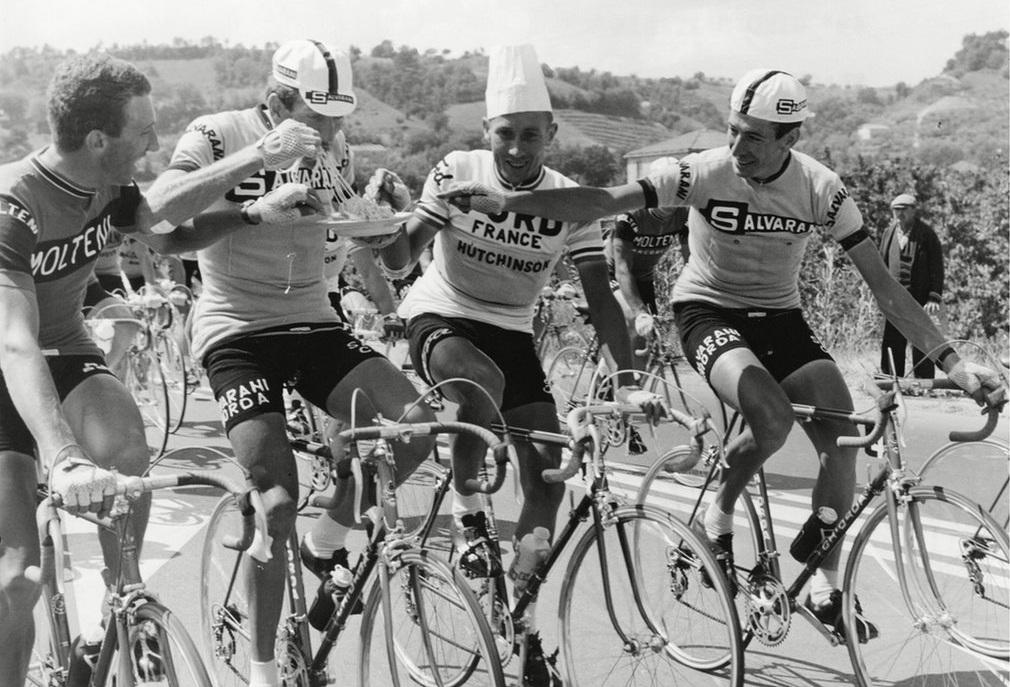
Charging your batteries with sugar
Ketogenic diets, high-protein diets, carbohydrate periodization during exercise... All these practices can be a real headache for the Sunday cyclist who, at heart, just wants to haveenough energy to pedal while enjoying the scenery and give it their all when the mood strikes, whether there's a Strava segment at stake or not.
In today's dietary cacophony, we feel a long way from the days when we simply wolfed down a big bowl of pasta the night before a long-distance event. Clinging to a past where we played sports without worrying about how to eat, many people continue to carb-load out of habit... Are they right? As is often the case with nutrition, the answer is not simple.
The battle against sugar
Often singled out, sugar seems to have become the culprit for many ills. It is true that it can lead to chronic diseases such as type 2 diabetes and obesity. But in the wake of the fight against sugar, we should ask ourselves whether ultra-processed foods should not be considered the number one enemy. Yes, they contain large amounts of sugar, but these foods are also high in fat and, above all, low in fiber and essential vitamins and minerals (but that's another story).
When you take a closer look at sugar in all its forms, you quickly realize that it is the fuel of choice for athletes, as well as a source of energy that nourishes our brains, regulates our body temperature, aids muscle contraction, and contributes to the overall functioning of our human machines. Yes, sugar is to life what cycling is to happiness: essential!
Saccharides, glycogen: let's sort it out
First and foremost a macronutrient, sugar falls into the carbohydrate category, which can be found either in simple forms, such as monosaccharides (glucose, fructose, galactose) and disaccharides (maltodextrin, lactose), or in complex forms, such as oligosaccharides (stachyose) and polysaccharides (fiber).
The smaller the molecule, as in the case of monosaccharides, the better it will be absorbed in the intestine and then enter our cells with the help of insulin. Metabolized by the liver, carbohydrates are used to produce energy, in the form of ATP, in all the body's cells. To maintain adequate blood sugar levels, sedentary individuals are recommended to eat natural sources of carbohydrates (in fruits, dairy products, and grain products) accounting for 45-65% of their total caloric intake (Zello, 2006).

To prevent hypoglycemia, the body can store carbohydrates in the form of a large branched molecule called glycogen. This polysaccharide is our "fuel" reservoir and is stored mainly in the muscles and liver. When blood sugar levels drop, the body metabolizes some of the glycogen to maintain homeostasis.
For endurance athletes, carbohydrate use is greatly increased during exercise (mainly at high intensity), which justifies the recommendation to consume at least 30 g of simple carbohydrates for every hour of physical activity, in addition to consuming them at the end in order to "refuel" and recover better (Medicine & Association, 2000).
Fill up
The intensity and duration of training efforts can vary greatly, which means that we can sometimes dangerously deplete our glycogen reserves. In addition, we may sometimes do a series of high-intensity sessions without necessarily meeting our carbohydrate needs, due to logistical constraints or suboptimal nutrition during exercise.
But where did the idea of eating a bowl of pasta the night before a competition or high-intensity effort come from? Quite simply from the principle that during high-intensity activity, the muscles and nervous system need access to a good amount of carbohydrates in order to optimize performance. We want to make sure that our needle points to F rather than E on the big day!
There are various glycogen supercompensation protocols that last several days, but it has been found that a protocol lasting 24 to 72 hours before the event is sufficient to quickly replenish glycogen stores, without even needing to deplete them before starting (Bussau, Fairchild, Rao, Steele, & Fournier, 2002).
The modified Scandinavian method is fairly well tolerated and causes little discomfort for athletes. Three days before exercise, it involves increasing carbohydrate intake to 70-75% of total calorie intake, which allows the body to reach adequate glycogen concentrations without too much effort or changes in eating habits. How does it work? Maintain a balanced diet, but consume more sugar-rich snacks throughout the day. For example, maltodextrin-based drinks, fruit juices, or maple syrup. The more liquid the carbohydrates are, the easier it will be to reach these high amounts without affecting the proportion of other foods on your plate. Also, for these three days, simple carbohydrates (white bread) should be favored over complex carbohydrates such as fiber (brown bread) in order to digest and absorb them better.

Distribute your carbohydrates well
The idea of eating a bowl of pasta the night before an intense event or a long Ride is therefore more of a popular belief than a proven fact.
Glycogen reserves are not depleted as quickly as one might think, so athletes who do not train every day and mainly engage in low to moderate intensity exercise do not need to systematically replenish their reserves. Overcompensating with glycogen will not improve their performance. On the contrary, drastically increasing simple carbohydrate intake, especially the night before or on the morning of a workout, is more likely to cause digestive discomfort and increase total calorie intake compared to the energy expended during exercise.
In fact, glycogen supercompensation is particularly useful for high-intensity events that last a long time (>3 hours). According to Benjamin Rapoport, a researcher at the Massachusetts Institute of Technology (MIT), glycogen depletion varies widely between athletes and is calculated based on maximum aerobic capacity (VO2 max), the weight of the leg muscles compared to the rest of the body, and the concentration of glycogen in the athlete's muscles and liver. Taking all these parameters into account would allow a well-trained athlete to run a marathon quickly without hitting the famous wall (Rapoport, 2010).
Let's keep in mind that not all sugars are created equal, and that just because we exercise doesn't mean we can overindulge in processed foods that are high in added sugars and other unnecessary ingredients. Optimizing our efforts starts with better distribution of carbohydrates in our diet, targeting high-intensity endurance training.
In short, if you are a regular athlete, I recommend eating balanced meals, carbohydrate-rich snacks around your workouts, and consuming at least 30 g of sugar per hour if you are cycling for more than an hour. For long Ride, choose simple sources of sugar such as sports drinks, juices, dried fruit, or delicious rice cakes.
Finally, remember that before a competition, with stress making your stomach tighten, your best ally will be what you tolerate well and, above all, what you like to eat... And if you're considering signing up for a long, high-intensity event, it might be a good idea to consult a nutritionist... rather than a wall!
References
Bussau, V. A., Fairchild, T. J., Rao, A., Steele, P., and Fournier, P. A. (2002), "Carbohydrate loading in human muscle: an improved 1-day protocol," European Journal of Applied Physiology, 87 (3), pp. 290-295.
Medicine, A.C.O.S. and Association, A. D. (2000), "Joint Position Statement: nutrition and athletic performance. American College of Sports Medicine, American Dietetic Association, and Dietitians of Canada," Medicine & Science in Sports & Exercise, 32 (12), p. 2130.
Rapoport, B. I. (2010), "Metabolic factors limiting performance in marathon runners," PLOS Computational Biology, 6 (10), p. e1000960.
Zello, G. A. (2006), "Dietary reference intakes for the macronutrients and energy: considerations for physical activity," Applied Physiology, Nutrition, and Metabolism, 31 (1), pp. 74-79.