
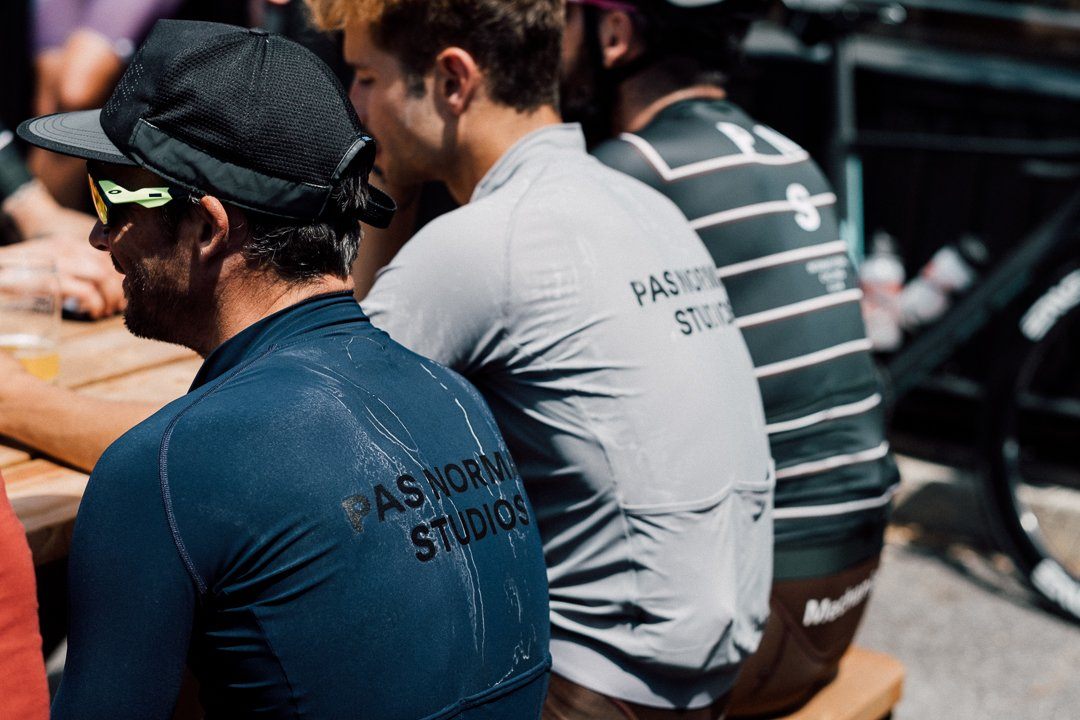
Watch out for overheating!
In this article, you will learn:
-
Why our bodies overheat
-
How to spot the signs of hyperthermia
-
What to do in an emergency
-
Tips for riding in hot weather
More accustomed to adapting to cold than heat, our bodies sometimes struggle during periods of summer heat waves. What's more, as cyclists, we are often exposed to the sun, riding on asphalt surfaces that cause the temperature to rise.
A NASA study on urban heat islands shows that the phenomenon is even worse in cities.
On flat terrain and downhill slopes, it's bearable. Unlike runners, we move fast enough that the airflow helps cool our skin. But lean into an uphill slope, slow down, and suddenly your forehead is dripping with sweat, your Jersey soaked, and the effort becomes more strenuous than usual, causing your heart rate to rise unusually high.
The heat has just begun its cruel and sometimes dangerous work of undermining.
Hyperthermia and heatstroke
A little science to explain how it works: for everything to function properly, the body's internal temperature must be maintained at around 37 degrees Celsius. When the body overheats, perspiration acts as a regulator. But sometimes the heat is so intense that the system literally cannot keep its cool, especially if it is dehydrated. This is known as hyperthermia.
Like an engine whose radiator has lost its Prestone, the dehydrated body gives out. First stage: heat exhaustion.
The symptoms are as follows:
-
Dizziness
-
Goosebumps
-
Sweaty palms
-
Rapid heartbeat
-
Nausea
-
Headaches
If this happens, don't wait: your body must cool down immediately to avoid heatstroke. Find some shade and stop to rest, take off your Jersey help sweat evaporate, wet your body (dive into a body of water if possible, spray yourself with a hose, etc.), and slowly drink water or a sports drink to rehydrate.
If these symptoms persist, or if they are accompanied by fever, loss of consciousness, skin rash, or disorientation, contact emergency services immediately and continue to cool your body while waiting for them to arrive. Your temperature has exceeded 40 degrees Celsius. The health risks are significant.
Driving in hot weather
To avoid this worst-case scenario, you can stack the odds in your favor by adopting a few proven tips.
Be mindful of the humidex: very humid conditions are less conducive to regulating internal heat through perspiration. If you are riding in a tropical country, for example, take the time to acclimatize to the heat before engaging in intense exercise.
Hydrate twice as much as usual. So, if you drink one bidon hour in cool weather, drink two. Consume beverages containing electrolytes to avoid losing too many minerals.
Use your gadgets. If you find that exerting 400 watts for one minute exhausts you much more than usual and causes a marked increase in your normal heart rate, this is a sign that your body is struggling to cope with the heat. Slow down.
Ride early or late in the day. The sun is Socks the heat less intense. However, the ideal time is in the morning, as the aforementioned NASA study showed that the asphalt retains heat long after the sun has stopped beating down.
Wear light, highly breathable clothing in light colors. These colors attract less sunlight.
Make sure you have a Helmet . Bring a cap, wet it, and put it on your head to cool down.
Apply sunscreen: sunburned skin is less effective at regulating its temperature.